
This enigma of ‘Civil Liberty or National Security’, is complicated and involves a plethora of different ideas and worldviews. To understand the scope of the question, it is imperative that one must first realize that the liberties under discussion are the modern individual rights such as the freedom of expression, privacy, and the absolute freedom of speech. On the other contrary, is the security of individuals of a society which, at times, is ensured at the expense of civil liberty. The question regarding liberty and National security holds great significance considering the fact that it has been approached many times in the recent years. For instance, the participants of the ‘War on Terror’ enacted laws that suppressed the aforesaid liberties in the name of national securities, such as the Patriot acts after 9/11 in US and the recent cyber-crime bill passed in Pakistan.
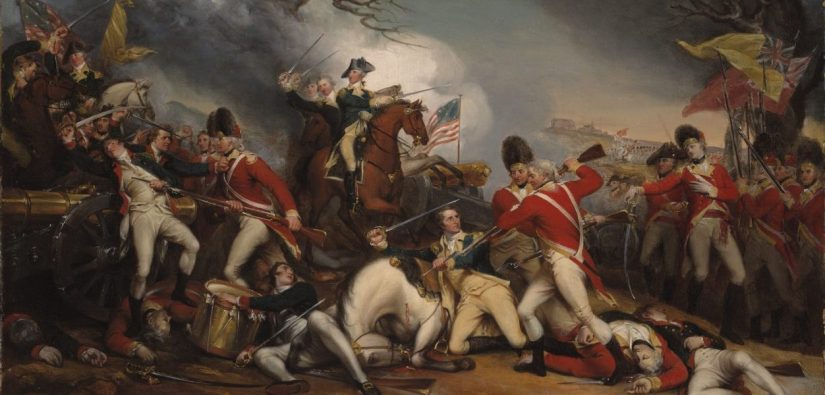
Although it is true that national security is, at times, unfairly used by those in power to legitimize their own agendas and that the security has no relation with prosperity, however, it is still more important than civil liberties and should be maintained at all costs. The basic purpose of a country is to provide a secure place to all its nationals. For this specific reason, there is a power structure in every state that strives to maintain law and order. America’s struggle against the British Empire highlights the importance of this obligation. According to the US’s monumental declaration of independence, “it is their right, it is their duty, to throw off such Government, and to provide new Guards for their future security” (Jefferson). With this statement the founding fathers legitimized the war against the king of England who failed to ensure security for his subjects residing in the colonies.
Orlando, Dallas, Las Vegas, and Sutherland Springs are few recent appalling events in which mass murderers with guns were involved. In all these scenarios, the liberty and freedom of owning arms and ammunition is putting the security of every American into jeopardy. The reasonable solution, as presented by many lawmakers, is to ban guns. However, the safety and security achieved through such means would come at the cost of civil liberty.

Similarly, Pakistani government recently introduced a Cyber Crime bill. The people are viewing these laws skeptically since the bill tends to undermine the freedom of expression on social media and the rest of the cyber world. “The law has alarmed human rights and pro-democracy activists” (“Pakistan passes controversial cyber-crime law” 2). However, though highly objectionable, some clauses of the law are logical. It orders strict action against anti-state elements and those who glorify acts of terror (khan 2). Anti-state elements and terrorist organizations with evil agendas have strong cyber presence and there are many amongst the general populace that have soft corners for these organizations. The only possible way to root out terrorism is to take harsh actions at the cost of civil liberty.
In 2016, a renowned Pakistani political leader, Altaf Hussain (MQM chief), made a hateful speech against the country, its private and public institutions, and other ethnic groups and motivated his followers to do the same. The lawlessness that ensued soon escalated and the security agencies had to step in to clear the situation. The whole incident depicts the misuse of freedom of expression and shows that to achieve national security, certain liberties have to be restricted. A similar event took place in 2007 when militants from Lal Masjid (a famous mosque in Pakistan’s capital, Islamabad), in a bid to establish an Islamic system, challenged the state and Pakistan’s military dictator, Gen Pervaiz Mushraff. These Islamic anarchists provoked hatred against people holding different religious views. Eventually the military stepped in and launched a successful operation against the vigilante group. In this scenario, the military did not accede to the undemocratic and threatening demands of the protesters and in fact took necessary steps to ensure the safety of the entire country and its nationals.


Another pertinent example to support the importance of national security would be that of Afghanistan. Without a proper structure, the country always stood without any national security and therefore became a battleground for different groups. Taking advantage of the poor conditions, first the soviets then Talibans and then the Americans, interfered in Afghan politics. Their interference descended the entire country into disorder. On the contrary, those who stand in opposition to national security and believe that civil liberty comes first, also present plausible arguments. The America’s Patriot Act, following 9/11, also allows the unjust use of power. Unlawful imprisonment and detainment of American citizens in Guantanamo jail, “privacy violation of anyone who comes into likely contact of the suspect” (Godoy and Abrambson 2), false accusations, religious discrimination and “guilty by association (Godoy and Abrambson 2), are few examples of the ‘Lawful immoral crimes’ carried out by the state, for the sake of national security.
To conclude, this debate regarding national security and civil liberty is going on for ages. Although both sides of the debate present reasonable arguments, the ones in favor of national security outweigh the ones that signify the importance of civil liberties. After understanding the significance of national security, it is safe to say that the unarguable significance of civil liberties is also part of a prosper society. In fact, national security tends to ensure a safe environment in which liberties can be practiced with ease.
 fajarkhansblog