
The enlightenment is the name given to the era of intellectual and critical ferment that began in Europe and America in the late 17th century and continued through the century that followed. During this period a diverse range of thinkers known as philosophers in France – sought to replace the blindly accepted beliefs of the past with rational thoughts and rational practice -in every activity from political economy to the treatment of criminals.

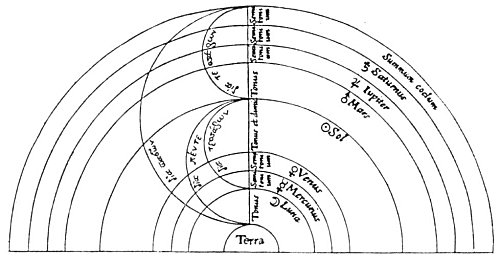
Their outlook was broadly liberal and humanitarian, and in general they were critical of the repressiveness and dogmatism of the Roman Catholic Church, and condemned those rulers who displayed a disregard for the welfare of their subjects. The thinkers of the Enlightenment looked back to the Scientific Revolution of the 16th and 17th centuries as their inspiration. Copernicus, Kepler, Galileo and others who had demonstrated the falsity of the Church’s teaching that the Earth was at the centre of the Universe, and Newton had, by inference from observations, come up with a complete explanation of motion, from that of cannon ball through the air to a planet orbiting the Sun. This and other advances in experimental science in the later 17th century – which had both explanatory and predictive power – led to the triumph of empiricism over cartesianism, the system of the French philosopher Rene Descartes (1596-1650). Descartes was of the stance that all knowledge gained via the senses is unreliable, and all that we can know for certain must be deduced from the basic irrefutable premise, “I think therefore I am”. The principles of empiricism, which contradicted those of Cartesianism, were enunciated by the English philosopher John Locke in his essay concerning Human Understanding (1690). In this, Locke argued that humans have no innate ideas, but derive all knowledge from experience, via ‘sensation’ and ‘reflection’. This was what constitutes reason, he argued, ‘as contra distinguished to Faith’.
Back then, few of the thinkers of the Enlightenment were atheists, but many were adherents of deism. Deists rejected the divine revelations and miracles of Christianity, proposing a God whose existence could be established by reason, rather than surmised by faith. Thus God was necessary as the ‘first cause’ that brought the universe into being, and it was God who had designed the stars and the planets to run like clockwork in the way described by Newton. This God had endowed humans with reason and free will, but otherwise stood back from his creation.
Some leading figures of the Enlightenment that many of us are familiar with are as follows:
- John Locke (1632-1704), English philosopher: popularized the idea of the ‘social contract’ between government and governed, and championed empiricism – the belief that knowledge is ultimately derived via the sense.
- Voltaire (Francois Marie Arouet, 1694-1778), French writer and philosopher; popularized ideas of Locke and Newton, champion of liberty and toleration.
- Cesare Beccaria (1738-94), Italian legal theorist: his well known book ‘Crimes and Punishments’ exponded the principles behind criminal law, called for the abolition of torture and capital punishment, and inspired many countries to reform their penal codes.
- Adam Smith (1723-90), Scottish philosopher and economist: The wealth of Nations he espoused free trade as against monopoly and regulation, upheld the role of self interest in the creation of a wealthier society, and demonstrated the economic advantages of the division of labor.
To conclude, the Enlightenment helped to establish the values of modern liberal democracies.
p.s. Will be writing more on the Age of reason soon 🙂
Happy reading!




 fajarkhansblog