
Personal Opinion

What Band of Brothers Taught Me About Character and Strength

I first watched Band of Brothers as a kid, sitting with my brothers, without fully understanding what I was watching. At that age, what stayed with me were the obvious things. The battles. The adrenaline. The courage. It felt intense and heroic, almost unreal.

Recently, I read the book. This time, it landed very differently.

What stayed with me wasn’t the action. It was the repetition. The discipline. The way strength showed up quietly, without needing attention or validation. The more I read, the more I realised that what made these men remarkable wasn’t what they did once, but what they did consistently.

I kept noticing how often strength looked like simply being there. Leadership in Easy Company was rarely loud. Richard Winters didn’t lead by commanding attention or asserting authority. He led by staying steady. By remaining composed when things went wrong. By being predictable in a way that made others feel safe. He absorbed pressure instead of passing it on.

There is something deeply grounding about people like that.

Reading about Winters made me reflect on how much I value steadiness in life. The ability to act with intention instead of impulse. To remain calm under pressure. To carry responsibility without needing recognition.

Lewis Nixon’s story stayed with me for different reasons. He struggled openly. He wasn’t polished or composed all the time. But he stayed. He showed up even when things were difficult. What mattered wasn’t perfection. It was presence. That reminded me that real strength isn’t about having everything under control. It’s about continuing to show up, even when you are tired, uncertain, or carrying your own weight quietly.

Then there was Ronald Speirs. He is often remembered for boldness, but what stood out to me was his clarity. When he acted, there was no confusion. No hesitation. No emotional noise. He didn’t get distracted by what was available or convenient. He focused on what needed to be done. That felt important to me.

It is easy to get carried away by what feels accessible. By what requires the least resistance. By what asks very little of us. It is much harder to stay loyal to your values when discipline feels boring, when restraint feels invisible, and when drifting would be easier. One of the strongest lessons the book left me with was that character is often revealed in restraint. In choosing not to indulge every impulse. In staying aligned even when no one is watching. In remaining consistent, not just when things are exciting, but when they are repetitive and ordinary.

What held Easy Company together wasn’t intensity or emotional display. It was reliability. Shared standards. The quiet understanding that everyone would do their part, day after day. Reading this book made me realise how much my own definition of strength has changed.

I value steadiness more than excitement. Consistency more than intensity. People who don’t disappear when things become dull or difficult. People who stay, not because it is thrilling, but because it is the right thing to do.

Over time, I’ve realised this is what character looks like in practice.

Character isn’t loud.
It doesn’t rush.
And it doesn’t need an audience.

It is built quietly. By staying consistent. By showing up. And by choosing your values, even when it would be easier not to.

Those are the lessons I’m taking with me.

The men in Band of Brothers didn’t speak about character. They lived it, in how they showed up, how they carried responsibility, and how they remained grounded even when circumstances weren’t ideal.

That is what stayed with me.

Personal Opinion

Have We Become Desensitized to Human Suffering?

We get so consumed by work, health, and the constant chase of everyday life that we forget to pause. To reflect. To look deeper into what’s happening around us, not just in our own circles, but in the world at large.

I’ve noticed this in myself too. Some days I’m scrolling through my feed, and I see a heartbreaking image, a child crying in Gaza, a family fleeing their home in fear. For a moment, I feel the weight of it. My chest tightens, I want to scream at the injustice … and then I move on. Another headline. Another video. Another crisis.

And that scares me. Because if I, someone who grew up in a home where world affairs and social issues were discussed daily, can feel myself going numb — what does that say about the world we live in today?

Growing up in Pakistan, news wasn’t just background noise. In my house, it was dinner table/ teatime conversation. Whether it was a natural disaster, political instability, or another global crisis, there was a sense of urgency and empathy in the air. We felt things deeply, and we were encouraged to form our own opinions and voice them on world politics and social issues. I was an active member of welfare organizations, going door to door to collect donations for earthquake victims, or volunteering with animal rights groups. Back then, empathy was action.

Later, when I moved to France for my master’s and then Dubai for work, I noticed a shift not just in myself, but in the life around me. Life became faster. More demanding. More self-focused. Work deadlines, health goals, financial security, they all crept up and started taking over. The tragedies on the other side of the screen became distant. Something to acknowledge briefly, maybe repost on social media, and then get back to the to-do list.

Part of the problem is the sheer amount of information we’re exposed to today. Our phones constantly flood us with breaking news, tragedies, and horrors from every corner of the world. One day it’s Gaza, the next Sudan, then Ukraine, Syria, or Yemen. Each crisis competes for our attention, and in the process, we become overwhelmed. Our brains, trying to protect us, go numb. We scroll past suffering because it feels endless and unsolvable. Meanwhile, the constant stream of entertainment and glamor creates the illusion that life is perfect and worry-free — sometimes it feels like we are living in The Hunger Games, spectators to both tragedy and spectacle.

But there’s also another layer: our busy, demanding lives. We’re stretched thin — trying to balance careers, relationships, health, and our own private struggles. It’s not that we don’t care, it’s that caring feels heavy and like an additional chore. And so, slowly, we stop looking too closely. We mourn a tragedy for 24 hours online, then the next day our feeds are back to workout tips, vacation reels, and coffee aesthetics.

And yet, we can’t afford to look away. When we lose our ability to feel outrage, to empathize, to pause and reflect, we risk losing part of our humanity. I understand that we need to protect our mental peace, but not to the point of becoming desensitized or selfish. Caring may feel heavy, but shutting ourselves off entirely is a risk we cannot take. Genocides don’t stop because the world looks away. Oppression doesn’t end because we’re too busy to notice.

Maybe we can’t solve every crisis. Maybe we can’t carry the weight of the world every single day. But we can remind ourselves to feel — to stay awake and aware. We can talk about these issues, even when the room grows quiet. We can notice when our hearts start to harden, and fight against it. We can choose not to be consumed only by our own struggles or distracted by life’s glamor. We can carry something, even if not everything — whether it’s reading deeply about one issue, donating AED 100, signing a petition, or simply pausing to truly care.

Because at the end of the day, silence and indifference have always been the best allies of injustice.

P.S. The purpose of writing this article is not to put anyone in guilt, but simply to remind us all that our lives have a purpose bigger than ourselves! 🙂

Social Issues

Racism: A Second Pandemic

The George Floyd incident has been a wake up call for the world from an already existing nightmare of Racism. In more than 50 states and 18 countries protesters and institutions, through persistent efforts, have reignited the long-due discourse on structural and institutional inequality, pervasive inequality, and the historic hegemony of white supremacy.

5068
Black Lives Have Always Mattered

There have been riots and rallies in protest against racism and the statues of Confederate heroes which are reminiscent of a discriminatory past. Bringing them down was indeed a monumental shift leading to the burying of a hollow reminder of a painful ideology and acts of oppression against black people.

Protesters have also severely criticized the beauty industry for deepening the problems of racism. And this criticism is not just confined to US or Europe but also to our part of the world where the problem of racism is deeply entrenched. According to a report from Global Industry Analysts, the skin lightening industry projected USD 19.8 billion in sales globally by 2018, with growth driven by demand from (both men and) women in the Asian, African and Middle East regions (McDougall, 2013). Therefore, it is high time for fairness/ beauty products industry, that has been thriving by manipulating the perceptions of what it takes to be accepted and admired and by creating a psychological need in terms of beauty products, to be accountable for its actions.

I really appreciate how Johnson & Johnson positively approached this criticism by announcing that it would no longer sell certain products that are advertised to whiten complexion. Band-aid which is also a subsidiary of Johnson & Johnson has also committed to launching a range of bandages in light, medium and deep shades of Brown and Black skin tones that embrace the beauty of diverse skin.

Unilever announced that it would be dropping the name of one of its hot-selling fairness products, “fair & lovely” but would continue to sell it. What a dichotomy and clear extension of hypocrisy? Fair & lovely has taken years to build upon damaged self-esteem, color-ism, and outright racism. So, by removing the name the root of the problem persists.

On the contrary, Nike, another leading brand also launched a unique anti-racism campaign. Titled ‘For Once, Don’t Do It’, the digital ad urges Americans to acknowledge the evils of racism. The message on the NIKE video reads: ‘For once, don’t do it. Don’t pretend there’s not a problem in America. Don’t turn your back on racism. Don’t accept innocent lives being taken from us. Don’t make any more excuses. Don’t think this doesn’t affect you. Don’t sit back and be silent. Don’t think you can’t be part of the change. Let’s all be part of the change.’

I personally believe that if you want to be associated to a cause, it is imperative for you to first understand it at a deeper level and practically act upon it. A lot of people even in our part of the world are supporting the cause of eliminating racism, but are they practically acting upon it? Regardless of your gender my question from you is: Have you stopped buying fairness products or undergoing fairness treatments? Have you stopped mocking, rejecting or looking down upon people around based on their color, caste, religion etc.? If yes, then you are part of the change because Change Starts with You!

Global Affairs

Another Financial Armageddon Expected In Near Future?

World Economy sleepwalking to another financial crises is quite a hot topic these days. Quite recently Mervyn King who was governor of Bank of England during the 2008 financial crises gave a speech in the semiannual meeting of the International Monetary Fund where he highlighted this issue.

I listened to his speech and he very rightly pointed out that by sticking to the new orthodoxy of the monetary policy and pretending that we have made the banking system safe and sound by introducing regulatory acts and laws we are sleepwalking towards the crises. It is predicted that the world will endure an extended period of low growth with ineffective ultra-low interest rates and infact the process has started already. Moreover, following the Great Inflation, the Great Stability, and the Great Recession, we have now entered the period of Great Stagnation.

20190413_WOC744
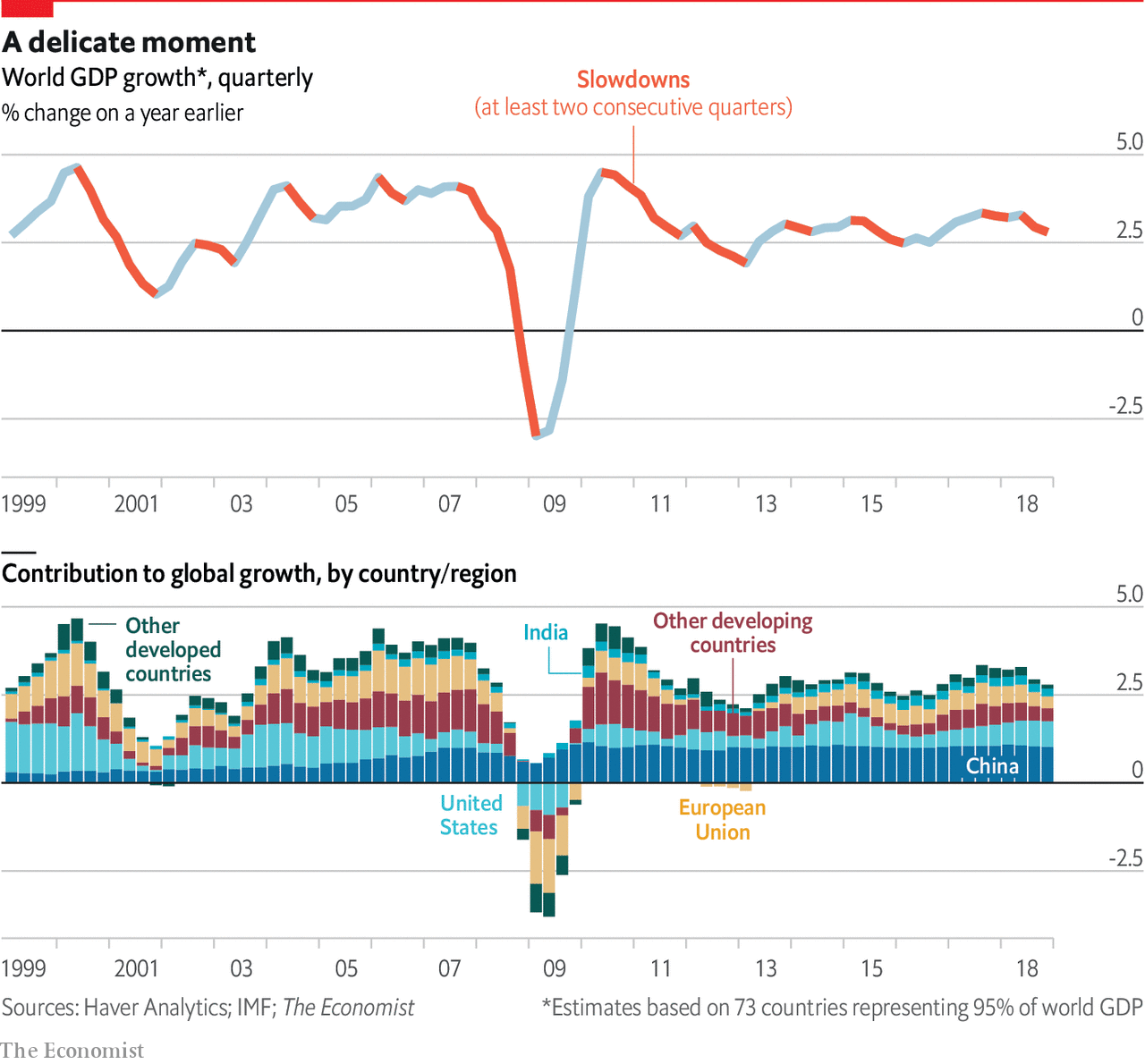
The World Economy is slowing down

There is no denying the fact that combating another financial crises would not be easy as the world already is experiencing a synchronized growth slowdown. The world is in a low growth trap for now and this can be validated by taking into account the performance of major economies. Quoting the example of China, its economy has grown by 6% in the third quarter of this year, its slowest pace in last 30 years. In addition to this, the German economy shrank by 0.1% in the second quarter and a contraction is expected in the third and fourth quarter as well placing its economy in a technical recession.

Main reasons for this slowdown in the world economy being the trade war between America and China, slowing manufacturing and shrinking investment opportunities. Furthermore, riots in Hong Kong, problems in key emerging countries such as Argentina and Turkey, growing tensions between France and Germany over the future direction of Euro and the increasingly bitter political conflict in the US. Also, not to ignore the ongoing tensions between Arab-foes which again are leading to slow world economic growth.

To conclude, prevailing trade tensions, policy uncertainty, and geopolitical risks will have to be resolved by all stakeholders who are shaping world economy.  Also, it is now time for the US Federal Reserve and other central banks to initiate talks with politicians behind closed doors to make legislators aware of how vulnerable they would be in another crisis. 

Period.

Personal Opinion

New Wave of McCarthyism

So today I read about McCarthyism and found it super interesting and I was convinced to research upon it and here I am now writing on it.

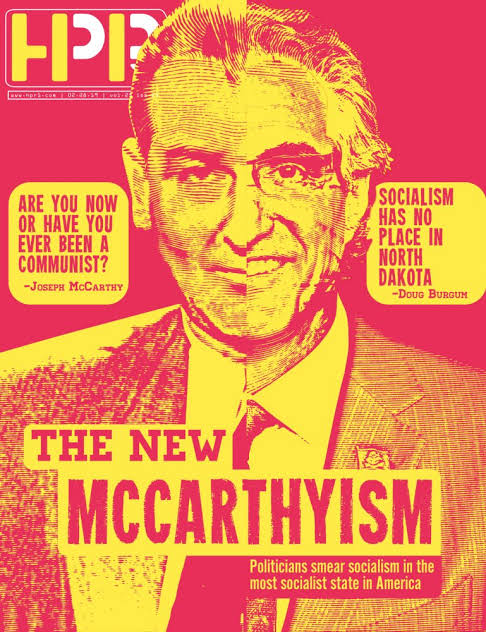
The ideology of McCarthyism was proposed by Joseph McCarthy who was a Republican (US Senator) and was part of Henry Truman’s government. He was of the stance that any communist minded people could be a threat to the sovereignty of US and it was imperative to get rid of them. He believed that most large businesses had explained Roosevelt’s economic policies as being socialist. And that during the unprecedented four terms of President Roosevelt, communists within the US had infiltrated the American state and government.

images (1)

Without giving any logical explanation or proof McCarthy was able to convince Henry Truman that the federal government was crawling with socialists and communists who were working against domestic and international US interests. Due to this mass hysteria dozens of state workers, artists, and others were investigated and demonized. And lobbies who were against public health services claimed that forced vaccination, mental care services and the fluoridation of water were plans of communist world government.

However, Dwight Eisenhower after coming into power realized that this hysteria was doing more damage than good to America’s image and interests. He took initiatives to subside this hysteria. Eventually, McCarthy looked more and more like a demented, egotistical demagogue (this reminds me of stranger things lol) who was discredited by many US journalists.

Now the new research tells that there is a wave of McCarthyism being observed in the American society. Controversial clinical psychologist Professor Jordan Peterson and Lee Jussim found out in their research that there has been a rising tide of leftist intolerance on American campuses. And it has resulted in harassment, violence, directed at speakers from non-left backgrounds. Speakers who present perspectives challenging ‘leftist sacred cows’ such as affirmative action, diversity programs and feminism have been subjected to aggressive proto-authoritarian tactics.

images

Professor Peterson blames post modernism for the intolerance exhibited by the liberals and the new leftists. He describes post modernists as ‘cultural Marxist conspiracy theorists’ who emerged in the 1970s after Marxism failed to win the class war. He adds that post modernists readjusted Marxism’s core axiom of class struggle to other frameworks of perceived group struggles: race, gender, ethnicity etc. So he is of the viewpoint that all subjects that fall under the umbrella of post modernism use unscientific methods to reach conclusions that have more to do with peddling ideologies than intelligence.

The response to the far right would require a more informed and less reactive retort which should involve making pragmatic alliances. But I think that such alliances cannot be made when the new liberal left too spirals into acts of demonization and reckless accusations.

Period.


History

The Enlightenment (Age of Reason)

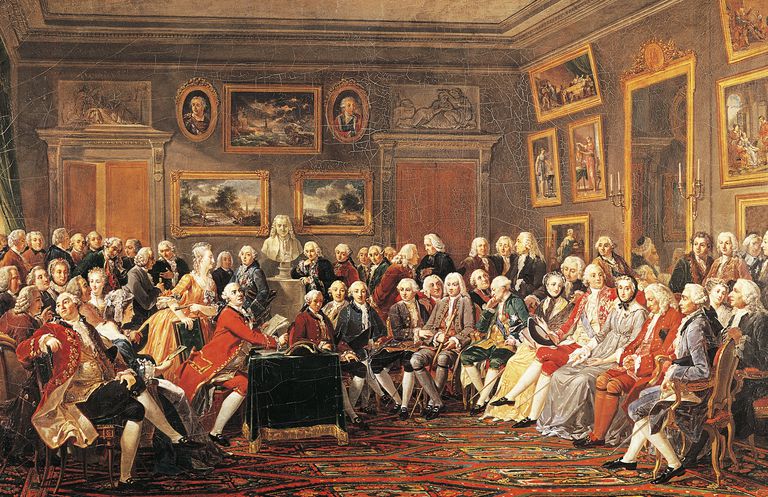
The enlightenment is the name given to the era of intellectual and critical ferment that began in Europe and America in the late 17th century and continued through the century that followed. During this period a diverse range of thinkers known as philosophers in France – sought to replace the blindly accepted beliefs of the past with rational thoughts and rational practice -in every activity from political economy to the treatment of criminals.

reading-voltaire-s-tragedy-l-orphelin-de-la-chine-at-madame-geoffrin-s-salon-painted-in-1812-by-gabriel-lemonnier-1743-1824-oil-on-canvas-129-5-x196-162278848-58e6e3323df78c516266d3a6

Their outlook was broadly liberal and humanitarian, and in general they were critical of the repressiveness and dogmatism of the Roman Catholic Church, and condemned those rulers who displayed a disregard for the welfare of their subjects. The thinkers of the Enlightenment looked back to the Scientific Revolution of the 16th and 17th centuries as their inspiration. Copernicus, Kepler, Galileo and others who had demonstrated the falsity of the Church’s teaching that the Earth was at the centre of the Universe, and Newton had, by inference from observations, come up with a complete explanation of motion, from that of cannon ball through the air to a planet orbiting the Sun. This and other advances in experimental science in the later 17th century – which had both explanatory and predictive power – led to the triumph of empiricism over cartesianism, the system of the French philosopher Rene Descartes (1596-1650). Descartes was of the stance that all knowledge gained via the senses is unreliable, and all that we can know for certain must be deduced from the basic irrefutable premise, “I think therefore I am”. The principles of empiricism, which contradicted those of Cartesianism, were enunciated by the English philosopher John Locke in his essay concerning Human Understanding (1690). In this, Locke argued that humans have no innate ideas, but derive all knowledge from experience, via ‘sensation’ and ‘reflection’. This was what constitutes reason, he argued, ‘as contra distinguished to Faith’.

Back then, few of the thinkers of the Enlightenment were atheists, but many were adherents of deism. Deists rejected the divine revelations and miracles of Christianity, proposing a God whose existence could be established by reason, rather than surmised by faith. Thus God was necessary as the ‘first cause’ that brought the universe into being, and it was God who had designed the stars and the planets to run like clockwork in the way described by Newton. This God had endowed humans with reason and free will, but otherwise stood back from his creation.

Some leading figures of the Enlightenment that many of us are familiar with are as follows:

  1. John Locke (1632-1704), English philosopher: popularized the idea of the ‘social contract’ between government and governed, and championed empiricism – the belief that knowledge is ultimately derived via the sense.
  2. Voltaire (Francois Marie Arouet, 1694-1778), French writer and philosopher; popularized ideas of Locke and Newton, champion of liberty and toleration.
  3. Cesare Beccaria (1738-94), Italian legal theorist: his well known book ‘Crimes and Punishments’ exponded the principles behind criminal law, called for the abolition of torture and capital punishment, and inspired many countries to reform their penal codes.
  4. Adam Smith (1723-90), Scottish philosopher and economist: The wealth of Nations he espoused free trade as against monopoly and regulation, upheld the role of self interest in the creation of a wealthier society, and demonstrated the economic advantages of the division of labor.


To conclude, the Enlightenment helped to establish the values of modern liberal democracies.

p.s. Will be writing more on the Age of reason soon 🙂

Happy reading!

History

Intellectual Golden Ages

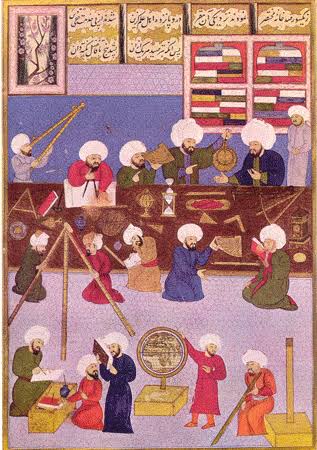
How many of you are familiar with the fact that the growth of Islam in the seventh century sparked a golden age of scientific discovery? Many of us are completely unaware of the fact that the era of the Abbasid Caliphs’ in Baghdad is known as the Golden Age of Islam. The ninth through thirteenth centuries in the Muslim world mark an era of scientific, religious, philosophical and cultural development, the scale and depth of which had never been seen in the history of mankind before.

images (7).jpeg

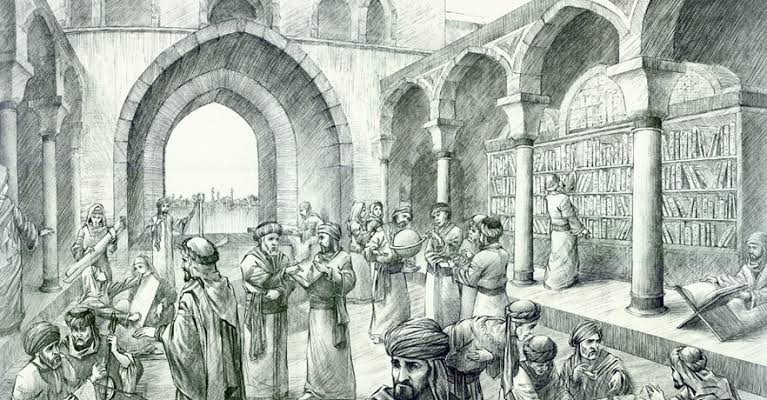
My analysis tells me that the major advancements in the fields stated above became visible in the early 800s, during the regime of Abbasids who rose to prominence on the back of promises of a positive and idealistic future. They had their capital, a world city of over a million people in Baghdad, and they had the diverse cultures of the Greeks, Copts, Persians, and Indians from which to adopt the best aspects of previous civilizations. I was super fascinated by the fact that in the mind of the seventh Abbasid caliph, Al- Mamun (813-833), future idealistic society could only be achieved through science and rationalism. He believed that if the best scholars from the Muslim world could be brought together to learn from each other, limitless possibilities would open up. With this in mind, he established an educational institute in Baghdad known as the House of Wisdom (Arabic: Bayt al-Hikmah). He believed that if the best scholars from the Muslim world could be together to learn from each other, limitless possibilities would open up.

House of Wisdom was a one stop learning hub as it comprised of a library, translation institute and a research lab. Impressive right? This was the time when books and knowledge were valued so much that if a person was able to translate any book from its original language into Arabic he was given the book’s weight in gold. Arabic became a lingua franca that could unite people from diverse backgrounds and it was a language commonly used by scientists and researchers.

images (5).jpeg

It should be noted that Islam lays great emphasis on the significance of acquiring knowledge. To an extent where it makes scientific research an act of worship.

In this article I will only talk about the contributions made my Muslims in the field of mathematics. Muslim scholars back then firmly believed that through the understanding of advanced mathematics they could discover the underlying principles that dictate the natural rules of the world. Today, anyone who has taken a basic physics class understands that formulas dictate the movement of objects through space. In the golden ages, that formula was a mystery, and through theory and experimentation, scientists hoped to find these seemingly magical algorithms. And through that understanding, a greater appreciation and love for God’s power and relationship with His creation could be achieved, making mathematics study a religious journey as well.

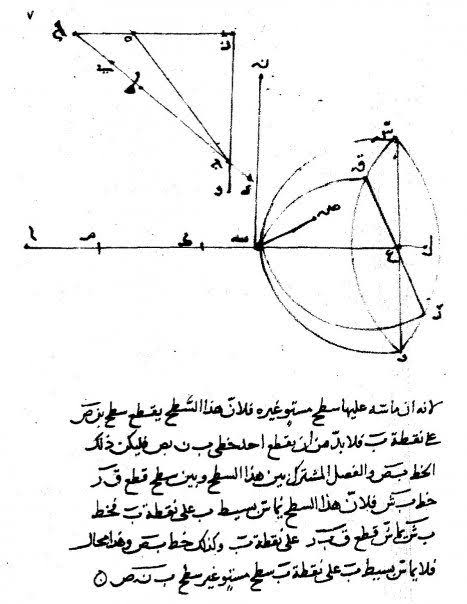
  • One of the most recognized Muslim mathematicians was Muhammad ibn Musa al-Khwariszmi who lived from 780 to 850. Among his major contributions was the adoption of the Indian numerical system and its dissemination. Al-Khwarizmi not only borrowed the system from the ancient Indians but also added on to it an important missing link: the ZERO (since anything divided by zero is undefined). Greatest contribution was the development of Algebra. In his monumental work “The Compendious Book on Calculation by Completion and Balancing”, he explains how algebraic equations can be used to solve everyday problems. Oh and al-jabr means completion, referring to the balancing of both sides of an algebraic equation to find a solution.
  • Omar Khayyam was another great Muslim mathematician who lived from 1048 to 1131. Apart from being known for poetry on love and mysticism he is also known as an accomplished mathematician. He managed to find a method for solving cubic equations- algebraic expressions in which the variable is raised to a power of three. He was the first one to formulate the binomial theorem which helps solve algrabraic expressions by expanding them into sums.

images (6).jpeg

Muslims further developed trigonometry itself, particularly the tenth century scientist al-Battani for a very practical reason. Through trigonometric functions and a basic understanding of the stars, people could calculate their exact position on earth, which was of vital importance to Muslims. Handbooks produced in the golden age listed hundred of cities, the it coordinates and direction from there direction from Mecca. The basic trigonometric properties put forth by Muslim mathematicians even serve as the basis for how GPS systems work today.

I will conclude this article on a short note that the contributions made by Muslim scientists and scholars should never be ignored. The contributions made back then helped in shaping Muslim culture and civilization. Very soon I will be writing on the contributions that were made by Muslims in fields like astronomy, medicine and geography.

Till then bye!

Personal Opinion

Why I still support Imran Khan

“True leaders understand that leadership is not about them but about those they serve. It is not about exalting themselves but about lifting others up.” 

— Sheri L. Dew 

Pakistan has three mainstream political parties right now: PPP, PMLN, and PTI. There are other regional parties and religious outfits too but I believe that they are not capable enough to achieve majority seats.

Now elections in any country is a starting line where journey begins as well as it ends. It is an extended race in which you have to remain on one path/side till the race ends. It is a race in which hurdles are inevitable but you have to necessarily cope with them. Election is vehicle, Constitution is fuel and political parties are drivers and their motto is a path to lead one to his destination. So we have three prominent parties in Pakistan: three drivers, three paths and three destinations. The question is which path to choose and the reason for choosing it? The path which is led by a genuine and reliable person who can be trusted, the path which has least number of hurdles and dacoits than others, the path which favors equality and the path that promises the prosperity and progression of our beloved country.

So, both PML-N and PPP have gained the government three times each and both failed to make Pakistan a progressive and prosperous nation. They became looters of our resources or supporters of them. They became criminals and Ghaadars by defaming the institution (Pakistan army) which remains most sincere to the country.  Thousands of people were killed during their eras. Bribery, nepotism, fraud, money laundering, terrorism and other social evils became custom of the days. So why to choose a path which is full of bloodshed, corruption, injustice and oppression of course?

1406838869a058c-original-1.jpg

So given below are a few reasons which have convinced me to support Pakistan Tehreek-e-Insaaf and vote for it:

c3e76f03cfcbe10906aa846e8a48c67d--imran-khan-top-cats.jpg   imran khanimran khan.jpg

  • I am in love with the ideology for which PTI stands for; which is providing INSAFF (justice) to everyone.
  • Imran Khan has struggled for 22 years to reach this stage, with zero political capital, background or legacy. He stood for a cause to make Pakistan a progressive nation and has remained loyal to it throughout. History tells that he has selflessly and tirelessly worked for public health and education of the under-privileged.
  • He refused close to 200 million pounds sterling as part of his settlement during Jemima’s divorce proceedings. If he was greedy for wealth, well there it was lying at his feet. Even the adjudicating British judge was taken aback at the refusal and had to ask him twice.
  • He is incredibly patriotic and unbelievably determined. The way he supports Pakistan army in his speeches is impressive too. He openly criticized Sharif’s “disloyalty” to the Pakistan army. “I have never seen a leader defaming his own military. There remains no difference between him and Indian Prime minister” said Imran Khan in a recent rally”.
  • He has a clear plan of making public sector institutions independent and free of political control.
  • Imran Khan does not have a history of having had people punished brutally or beaten or attacked. He has not been involved in any indirect or direct criminal activity that ever harmed or took another human’s life. A Big reason for which  support him.
  • Khan’s courage and valor is unquestionable. Barring a bullet-proof jacket, the man hardly has any security. His well-wishers often worry about him for this reason, but he is the fearless man that he is.
  • He plans to give constitutional protection to bureaucrats so they cannot be changed like chess board pieces and work without fear or favor.
  • He plans to make the police totally apolitical and an accountable institution, strong, free of political control, so they can do their jobs without fear or favor.

It is unfortunate that as a nation we have become so used to being led by corrupt leaders  that many of us have turned a blind eye towards the sufferings of our motherland and have accepted dishonest and corrupt leaders. As strange as it may sound but for a lot of people dishonesty and corruption is acceptable, but a straightforward and sincere leader with much less serious mistakes is lambasted. Always remember that our leaders are a reflection of who we are. 

It’s is time that we think rationally and vote wisely for a progressive and prosperous Pakistan! Period.


Personal Opinion

Is National security more important than Civil liberties?

This enigma of ‘Civil Liberty or National Security’, is complicated and involves a plethora of different ideas and worldviews. To understand the scope of the question, it is imperative that one must first realize that the liberties under discussion are the modern individual rights such as the freedom of expression, privacy, and the absolute freedom of speech. On the other contrary, is the security of individuals of a society which, at times, is ensured at the expense of civil liberty. The question regarding liberty and National security holds great significance considering the fact that it has been approached many times in the recent years. For instance, the participants of the ‘War on Terror’ enacted laws that suppressed the aforesaid liberties in the name of national securities, such as the Patriot acts after 9/11 in US and the recent cyber-crime bill passed in Pakistan.

Although it is true that national security is, at times, unfairly used by those in power to legitimize their own agendas and that the security has no relation with prosperity, however, it is still more important than civil liberties and should be maintained at all costs. The basic purpose of a country is to provide a secure place to all its nationals. For this specific reason, there is a power structure in every state that strives to maintain law and order. America’s struggle against the British Empire highlights the importance of this obligation. According to the US’s monumental declaration of independence, “it is their right, it is their duty, to throw off such Government, and to provide new Guards for their future security” (Jefferson). With this statement the founding fathers legitimized the war against the king of England who failed to ensure security for his subjects residing in the colonies.

pexels-photo-62279-e1496266803782
America’s war of Independence 

Orlando, Dallas, Las Vegas, and Sutherland Springs are few recent appalling events in which mass murderers with guns were involved. In all these scenarios, the liberty and freedom of owning arms and ammunition is putting the security of every American into jeopardy. The reasonable solution, as presented by many lawmakers, is to ban guns. However, the safety and security achieved through such means would come at the cost of civil liberty.

920x920
A gunman opened fire on a music festival in Las Vegas, killing over 20 people. (Photo by Ethan Miller/Getty Images)


Similarly, Pakistani government recently introduced a Cyber Crime bill. The people are viewing these laws skeptically since the bill tends to undermine the freedom of expression on social media and the rest of the cyber world. “The law has alarmed human rights and pro-democracy activists” (“Pakistan passes controversial cyber-crime law” 2). However, though highly objectionable, some clauses of the law are logical. It orders strict action against anti-state elements and those who glorify acts of terror (khan 2). Anti-state elements and terrorist organizations with evil agendas have strong cyber presence and there are many amongst the general populace that have soft corners for these organizations. The only possible way to root out terrorism is to take harsh actions at the cost of civil liberty.

In 2016, a renowned Pakistani political leader, Altaf Hussain (MQM chief), made a hateful speech against the country, its private and public institutions, and other ethnic groups and motivated his followers to do the same. The lawlessness that ensued soon escalated and the security agencies had to step in to clear the situation. The whole incident depicts the misuse of freedom of expression and shows that to achieve national security, certain liberties have to be restricted. A similar event took place in 2007 when militants from Lal Masjid (a famous mosque in Pakistan’s capital, Islamabad), in a bid to establish an Islamic system, challenged the state and Pakistan’s military dictator, Gen Pervaiz Mushraff. These Islamic anarchists provoked hatred against people holding different religious views. Eventually the military stepped in and launched a successful operation against the vigilante group. In this scenario, the military did not accede to the undemocratic and threatening demands of the protesters and in fact took necessary steps to ensure the safety of the entire country and its nationals.

download (1)
Lal Masjid incident 


hqdefault.jpg
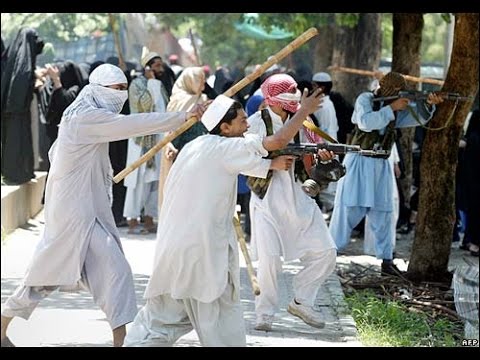
Islamic anarchists fighting Pakistan army

Another pertinent example to support the importance of national security would be that of Afghanistan. Without a proper structure, the country always stood without any national security and therefore became a battleground for different groups. Taking advantage of the poor conditions, first the soviets then Talibans and then the Americans, interfered in Afghan politics. Their interference descended the entire country into disorder. On the contrary, those who stand in opposition to national security and believe that civil liberty comes first, also present plausible arguments. The America’s Patriot Act, following 9/11, also allows the unjust use of power. Unlawful imprisonment and detainment of American citizens in Guantanamo jail, “privacy violation of anyone who comes into likely contact of the suspect” (Godoy and Abrambson 2), false accusations, religious discrimination and “guilty by association (Godoy and Abrambson 2), are few examples of the ‘Lawful immoral crimes’ carried out by the state, for the sake of national security.

To conclude, this debate regarding national security and civil liberty is going on for ages. Although both sides of the debate present reasonable arguments, the ones in favor of national security outweigh the ones that signify the importance of civil liberties. After understanding the significance of national security, it is safe to say that the unarguable significance of civil liberties is also part of a prosper society. In fact, national security tends to ensure a safe environment in which liberties can be practiced with ease.

History

Pythagoras of Samos

It’s been quite a while since I wrote my last blog article and so this seems to be a nice and perfect time to write something. Though I am not a very big fan of maths and for some reason I have always found it super challenging but today I am going to be writing on something relevant to the subject field. No worries if you are not a maths enthusiast but if you happen to have even the slightest of interest in philosophy and history you will find this piece of writing quite interesting.

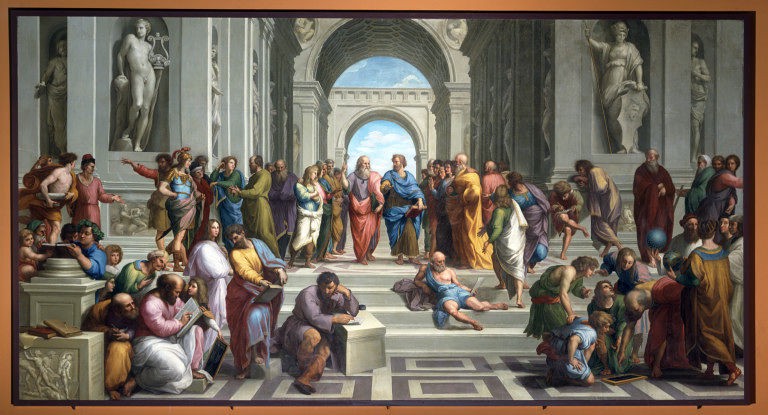
It’s unfortunate that I did not get the chance to study Philosophy earlier despite having deep interest in the subject but here I am studying a philosophy course called “Logic-how to think” from an Ex-formanite who is also a PhD in Philosophy from University of Edinburgh. I believe that all great Philosophers like Socrates, Aristotle, Pythagoras etc were great thinkers and were alike in a way that they had deep craving to understand the meaning of life. Either it be the understanding of virtue, politics or ethics (Socrates) or it be the study of  logic or metaphysics ( Aristotle), or the understanding of geometry and medicine (Pythagoras) all these great thinkers wanted to know more about life and their existence. They were the kind of people who would think of things beyond obvious and beyond the monotonous life of their times.

0_UWTccNhXYlA-u6yA
Great Philosophers who discovered the different dimensions of life

Now one of the reasons for which I am taking Logic this semester is because it gives great promise for it provides a mastery of invention and judgment, as well as supplies ability to divide, define, and prove with conviction. It is such an important part of philosophy that it serves the other parts in much the same way as the soul does the body. However, I will be talking more about it once I have more knowledge regarding it. And so for now I will stick to the topic which is “Pythagoras-the pioneer of Pythagoras theorem”.

As astonishing as it may sound Pythagoras did not leave a single written work behind him. However, Heraclitus the natural scientist pretty well shouts it out when he says: “Pythagoras, son of Mnesarchus , practiced inquiry more than any other man, and selecting from the writing of those before him he made a wisdom of his own – a polymath, a worthless artifice”. (Pythagoras by Kitty Ferguson)

pythagoras-4 (1)
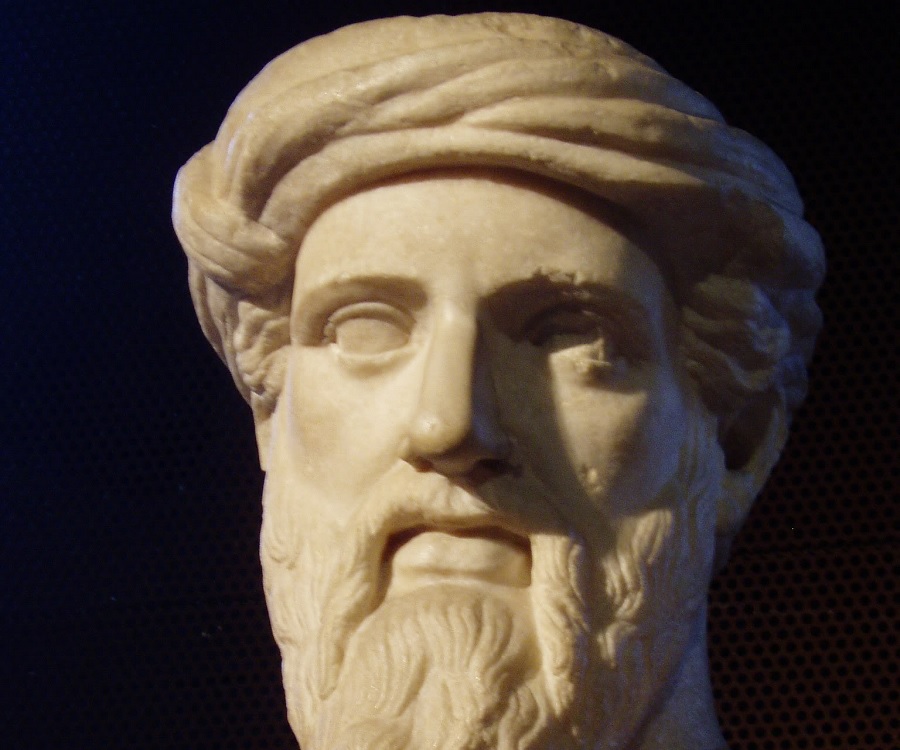
Pythagoras

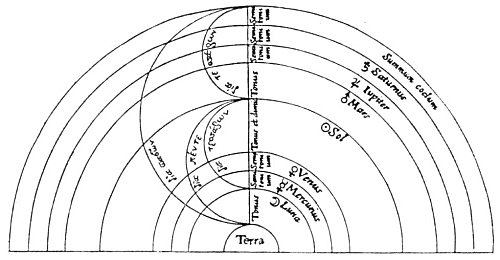
Pythagoras believed that all things revolve around numbers and this discovery was made by him in music. The first natural law ever formulated mathematically was the relationship between musical pitch and the length of a vibrating harp string and Pythagoras was the one to formulate it. He also believed that the universe itself hummed with its own harmony—beautiful, divine, and inaudible to human ears. He characterized the intervals between successive orbits, such as those of Mercury and Venus, as either tones or half-tones (the smallest intervals in the musical scale), adding up to seven whole tones that form a perfectly harmonious natural order. According to many ancient sources Pythagoras applied his discoveries in music theory to the behavior of the celestial objects. Pluck a string, and the pitch of the note it produces is related to the length of the string. When the lengths of two strings are a simple ratio—1/2, 2/3, and so on—the notes together sound harmonious.


Spheres_Image
Music of the Spheres 


Apart from this, he also proposed the mathematical concept known as “The Pythagoras Theorem” which we are all very familiar with.  Pythagoras’ Theorem and the properties of right-angled triangles seems to be the most ancient and widespread mathematical development after basic arithmetic and geometry, and it was touched on in some of the most ancient mathematical texts from Babylon and Egypt, dating from over a thousand years earlier.  He deduced that, for any right-angled triangle, the square of the length of the hypotenuse (the longest side, opposite the right angle) is equal to the sum of the square of the other two sides (or “legs”). Written as an equation: a2 + b2 = c2. The simplest and most commonly quoted example of a Pythagorean triangle is one with sides of 3, 4 and 5 units (32 + 42 = 52, as can be seen by drawing a grid of unit squares on each side as in the diagram given below), but there are a potentially infinite number of other integer “Pythagorean triples”, starting with (5, 12 13), (6, 8, 10), (7, 24, 25), (8, 15, 17), (9, 40, 41), etc. It should be noted, however that (6, 8, 10) is not what is known as a “primitive” Pythagorean triple, because it is just a multiple of (3, 4, 5).

pythagoras_theorem
Pythagoras’ (Pythagorean) Theorem

Among his other major achievements in geometry, Pythagoras also realized that the sum of the angles of a triangle is equal to two right angles (180°), and probably also the generalization which states that the sum of the interior angles of a polygon with n sides is equal to (2n – 4) right angles, and that the sum of its exterior angles equals 4 right angles. They were able to construct figures of a given area, and to use simple geometrical algebra, for example to solve equations such as a(a – x) = x2 by geometrical means.

To conclude, Pythagoras made some thought provoking discoveries which are studied and practiced even to this day. His calm nature and passion for wisdom was what helped him in creating breakthroughs in the fields of maths, science and philosophy.