
How many of you are familiar with the fact that the growth of Islam in the seventh century sparked a golden age of scientific discovery? Many of us are completely unaware of the fact that the era of the Abbasid Caliphs’ in Baghdad is known as the Golden Age of Islam. The ninth through thirteenth centuries in the Muslim world mark an era of scientific, religious, philosophical and cultural development, the scale and depth of which had never been seen in the history of mankind before.
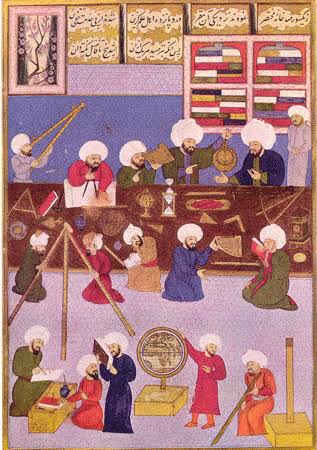
My analysis tells me that the major advancements in the fields stated above became visible in the early 800s, during the regime of Abbasids who rose to prominence on the back of promises of a positive and idealistic future. They had their capital, a world city of over a million people in Baghdad, and they had the diverse cultures of the Greeks, Copts, Persians, and Indians from which to adopt the best aspects of previous civilizations. I was super fascinated by the fact that in the mind of the seventh Abbasid caliph, Al- Mamun (813-833), future idealistic society could only be achieved through science and rationalism. He believed that if the best scholars from the Muslim world could be brought together to learn from each other, limitless possibilities would open up. With this in mind, he established an educational institute in Baghdad known as the House of Wisdom (Arabic: Bayt al-Hikmah). He believed that if the best scholars from the Muslim world could be together to learn from each other, limitless possibilities would open up.
House of Wisdom was a one stop learning hub as it comprised of a library, translation institute and a research lab. Impressive right? This was the time when books and knowledge were valued so much that if a person was able to translate any book from its original language into Arabic he was given the book’s weight in gold. Arabic became a lingua franca that could unite people from diverse backgrounds and it was a language commonly used by scientists and researchers.
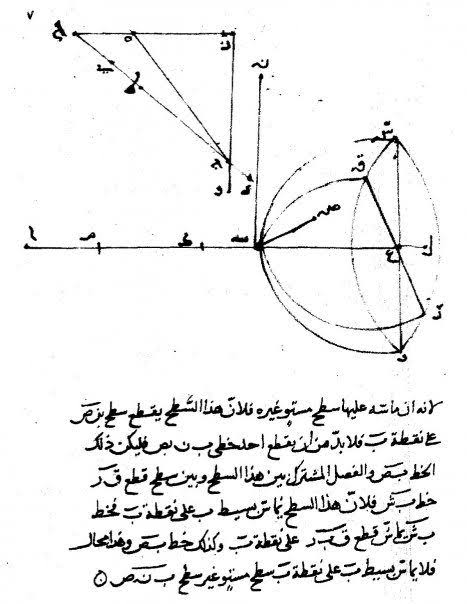
It should be noted that Islam lays great emphasis on the significance of acquiring knowledge. To an extent where it makes scientific research an act of worship.
In this article I will only talk about the contributions made my Muslims in the field of mathematics. Muslim scholars back then firmly believed that through the understanding of advanced mathematics they could discover the underlying principles that dictate the natural rules of the world. Today, anyone who has taken a basic physics class understands that formulas dictate the movement of objects through space. In the golden ages, that formula was a mystery, and through theory and experimentation, scientists hoped to find these seemingly magical algorithms. And through that understanding, a greater appreciation and love for God’s power and relationship with His creation could be achieved, making mathematics study a religious journey as well.
- One of the most recognized Muslim mathematicians was Muhammad ibn Musa al-Khwariszmi who lived from 780 to 850. Among his major contributions was the adoption of the Indian numerical system and its dissemination. Al-Khwarizmi not only borrowed the system from the ancient Indians but also added on to it an important missing link: the ZERO (since anything divided by zero is undefined). Greatest contribution was the development of Algebra. In his monumental work “The Compendious Book on Calculation by Completion and Balancing”, he explains how algebraic equations can be used to solve everyday problems. Oh and al-jabr means completion, referring to the balancing of both sides of an algebraic equation to find a solution.
- Omar Khayyam was another great Muslim mathematician who lived from 1048 to 1131. Apart from being known for poetry on love and mysticism he is also known as an accomplished mathematician. He managed to find a method for solving cubic equations- algebraic expressions in which the variable is raised to a power of three. He was the first one to formulate the binomial theorem which helps solve algrabraic expressions by expanding them into sums.

Muslims further developed trigonometry itself, particularly the tenth century scientist al-Battani for a very practical reason. Through trigonometric functions and a basic understanding of the stars, people could calculate their exact position on earth, which was of vital importance to Muslims. Handbooks produced in the golden age listed hundred of cities, the it coordinates and direction from there direction from Mecca. The basic trigonometric properties put forth by Muslim mathematicians even serve as the basis for how GPS systems work today.
I will conclude this article on a short note that the contributions made by Muslim scientists and scholars should never be ignored. The contributions made back then helped in shaping Muslim culture and civilization. Very soon I will be writing on the contributions that were made by Muslims in fields like astronomy, medicine and geography.
Till then bye!

 fajarkhansblog